PBSS4250X,115
- Description
- Bipolar (BJT) Single Transistor, NPN, 50 V, 550 mW, 2 A, 300 hFE
- Collector Emitter Saturation Voltage
- 380mV
- Collector Emitter Voltage (VCEO)
- 50V
- Transition Frequency
- 100MHz
- Datasheet
Quantity
Let us do the sourcing. Even if it's not available now, our team can track it down and tailor a solution just for you.
- High Collector Emitter Breakdown Voltage: 50 V
- Max Collector Current: 2 A
- Transition Frequency: 100 MHz
- Power Dissipation: 1 W
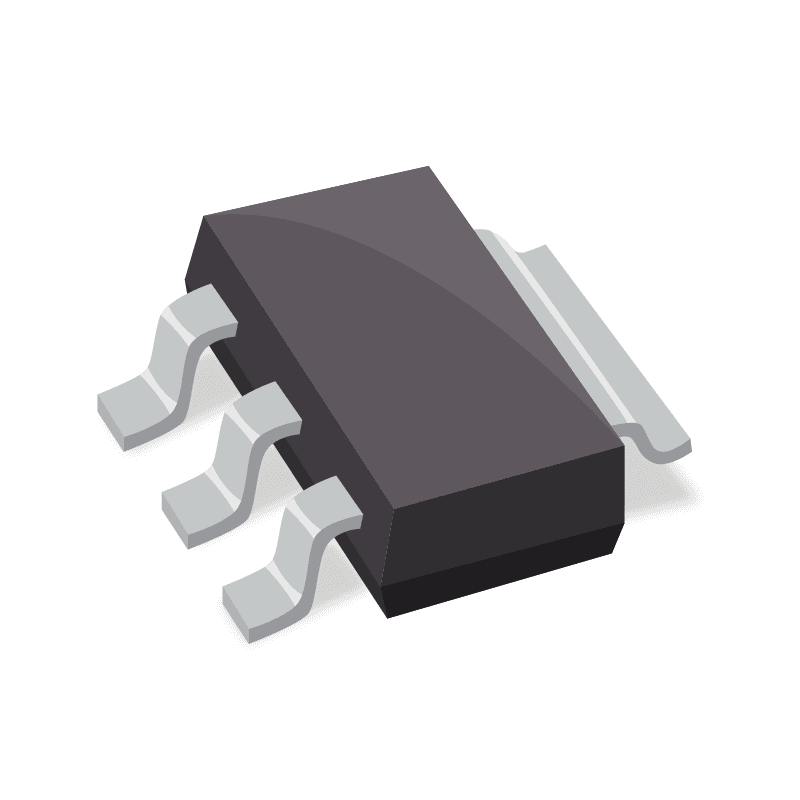
- Compact SOT-89 Package
- Lead Free and RoHS Compliant
The Nexperia BJT Single Transistor NPN is a high-performance electronic component designed for various applications requiring efficient signal amplification and switching. With a maximum collector current of 2 A and a collector emitter breakdown voltage of 50 V, this transistor is ideal for use in power management and signal processing circuits. Packaged in a compact SOT-89 form factor, it ensures easy integration into space-constrained designs while delivering reliable performance across a wide temperature range.
The Bipolar (BJT) Single Transistor is commonly used in various electronic circuits for amplification and switching applications. With a collector current rating of 2 A and a breakdown voltage of 50 V, it is ideal for power management in consumer electronics, automotive systems, and industrial controls. Engineers and hobbyists utilize this N-Channel transistor for its efficiency and compact size in surface mount designs.
Fusion’s in-house quality hubs and Prosemi testing facility are fully certified to meet critical industry standards for electronic component inspection and testing.
Quantity
Let us do the sourcing. Even if it's not available now, our team can track it down and tailor a solution just for you.