LMK00804BPWR
- Description
- Low skew, 1-to-4 multiplexed differential/LVCMOS-to-LVCMOS/TTL fanout buffer 16-TSSOP -40 to 85
- Propagation Delay
- 2.1ns
- Max Junction Temperature (Tj)
- 125°C
- Operating Supply Voltage
- 3.3V
- Datasheet
Quantity
Let us do the sourcing. Even if it's not available now, our team can track it down and tailor a solution just for you.
- Fanout Buffer with One Input and Four Outputs
- 350M Hz Maximum Operating Frequency
- 2.1ns Propagation delay, 55% Duty Cycle
- 3.135V to 3.465V supply, 3.3V nominal, 21mA Quiescent Current
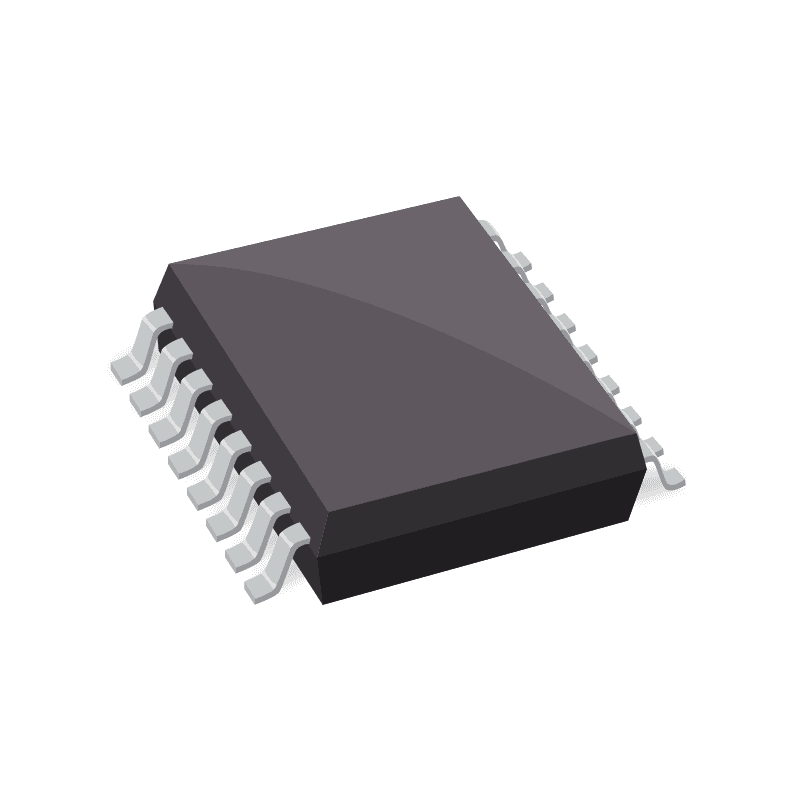
- 16-Pin TSSOP package, -40C to 85C Operating Range
- Lead Free and RoHS compliant, 2, 500 per Reel
The LMK00804BPWR from Texas Instruments is a low-skew fanout clock buffer that drives four LVCMOS/TTL outputs from a single input, operating to a 350M Hz maximum frequency. It runs from a 3.135V to 3.465V supply with a nominal 3.3V rail, draws 21mA quiescent current, and delivers a 2.1ns propagation delay with a 55% duty cycle. The LMK00804BPWR is supplied in a 16-pin TSSOP package rated for -40C to 85C and ships on tape and reel in quantities of 2, 500.
A fanout clock buffer replicates one reference clock across multiple outputs with matched delay, preventing the signal-integrity and skew problems that come from daisy-chaining or star-wiring a single clock source. Devices of this class distribute reference clocks to FPGAs, processors, Ethernet PHYs, data converters and memory interfaces in networking equipment, industrial control and test instrumentation. The 350M Hz ceiling and 2.1ns propagation delay place this part in general-purpose board-level clock distribution rather than multi-gigahertz serial-link reference duty, and the 125C maximum junction temperature gives thermal margin over the 85C ambient rating.
Fusion’s in-house quality hubs and Prosemi testing facility are fully certified to meet critical industry standards for electronic component inspection and testing.
Quantity
Let us do the sourcing. Even if it's not available now, our team can track it down and tailor a solution just for you.